
Planning winter boat storage on Long Island starts before your final day on the water. There may still be a few good boating days left on the East End, but organizing your haul-out, winterization, and service needs now lets you enjoy those last trips with a plan already in place.
Whether you spend your season cruising the Peconic Bays, fishing out of Shinnecock, or exploring the waters around Westhampton Beach, preparing for winter starts before your boat leaves the dock. Here is what Long Island boat owners should know before wrapping up the season.
1. Schedule Your Boat Haul-Out Before Cold Weather Arrives
Start with your expected last day on the water, then coordinate a haul-out and winterization schedule with your marina. Your plans should account for weather, the boat’s systems, and the service team’s availability.
Avoid choosing a date based only on when you stopped boating last year. Freezing conditions can damage unprotected equipment, so your boat needs to be properly prepared before those conditions arrive. Taking it out of the water alone does not provide that protection.
If you are hoping to fit in a few more fall outings, discuss that when scheduling. Establishing a target date gives everyone a clearer plan for the end of the season.
2. Compare Quotes for Winter Boat Storage on Long Island
Before booking winter boat storage on Long Island, ask for a written breakdown of the services included. Hauling, winterization, covering, storage, and spring launch are separate tasks, even when a marina offers them together.
Questions worth asking include:
- Does the quote include haul-out and bottom washing?
- Which engines and onboard systems will be winterized?
- Is shrink wrapping or another cover included?
- How will batteries be maintained during storage?
- Can you access the boat during the winter, and how is access arranged?
- Are spring commissioning and launch included or quoted separately?
Share your boat’s make, model, length, engine configuration, and equipment when requesting an estimate. A boat with a freshwater system, head, air conditioning, or generator has different preparation needs than a simpler open boat.

3. Prepare Your Boat Before Drop-Off
A little preparation makes the handoff easier and helps your service team understand what needs attention.
Remove food, drinks, valuables, portable electronics, and personal belongings before storage. Clean and thoroughly dry removable cushions and other soft goods before putting them away in a suitable dry location. Coordinate the removal of safety equipment so anything required for the boat’s final trip remains aboard until that trip is complete.
Take clear photos of the boat’s condition and record the engine hours. Then write down any issues you noticed during the season, including warning messages, unusual vibrations, slow starts, or equipment that worked intermittently. Details about when a problem occurred can be more useful than a general request to “check the engine.”
Confirm where to leave the boat, how to provide keys, and who should receive updates or approve additional work.
4. Include Every Onboard System in Your Winterization Plan
Engine preparation is an essential part of winter storage, but the rest of the boat needs attention too. Depending on its equipment, that may include freshwater plumbing, sanitation systems, washdowns, air conditioning, and a generator.
The correct procedures depend on the specific engine and equipment installed. Fuel treatment, lubrication, draining, and battery care should follow the applicable manufacturers’ instructions. A general checklist is a useful planning tool, but it cannot replace the procedures for your particular boat. For an overview of engine preparation, see Mercury Marine’s outboard winterization guide.
Ask your service team to confirm which systems are covered by the work order. This is especially helpful if you added equipment during the season or are storing the boat with a new provider.

5. Plan for Protection Throughout the Winter
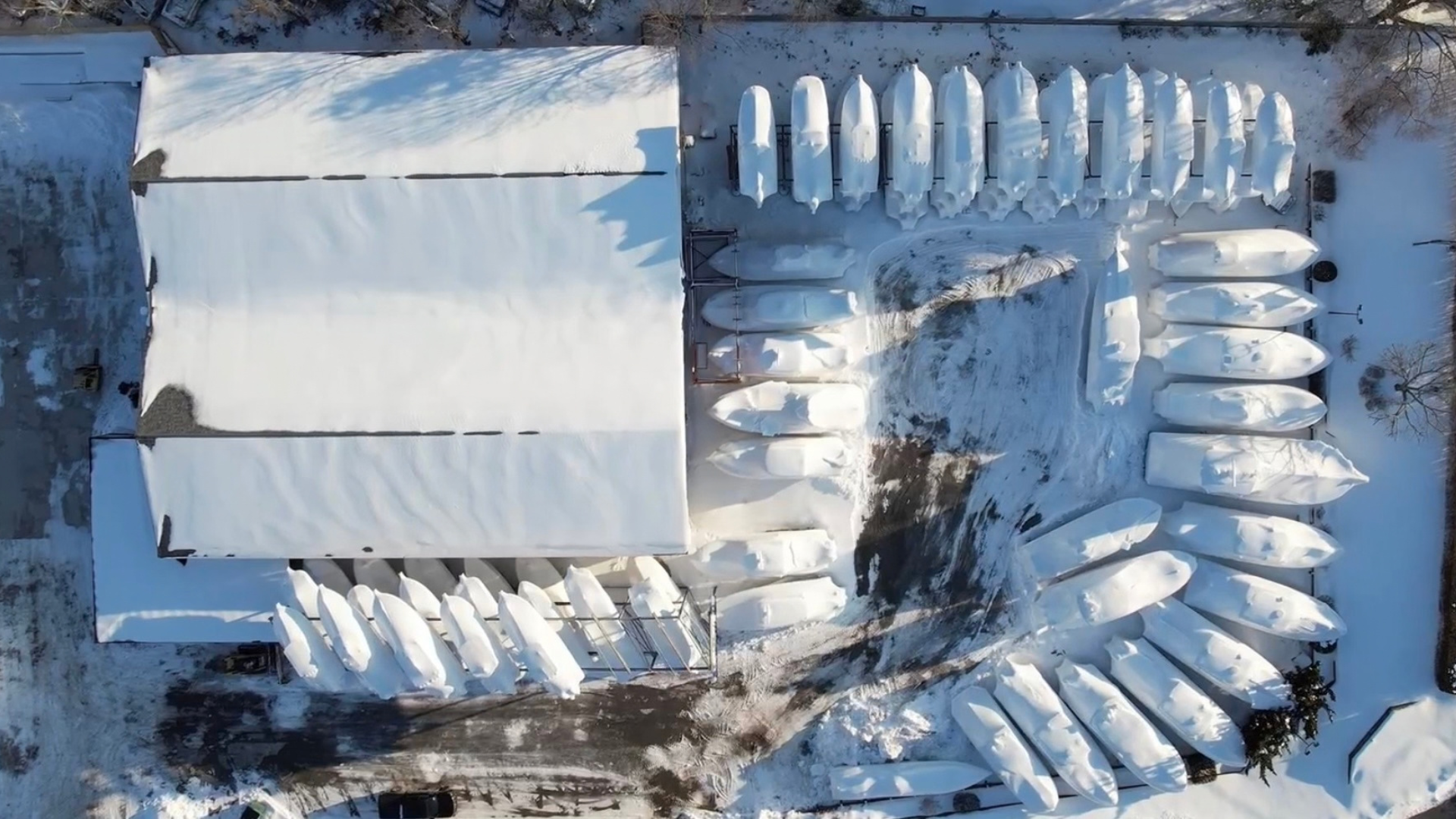
A storage cover should help keep weather and debris out while allowing appropriate ventilation. Before the boat is covered, make sure cleaning, drying, and any work requiring access have been coordinated.
Ask the storage provider how the boat will be supported, who checks its covering, and how any winter access or service visits should be arranged. Knowing those details before drop-off helps prevent confusion once the boat is put away.
6. Make Your Spring Plans Before the Season Ends
Fall is a useful time to discuss maintenance and repairs while the season’s experiences are still fresh. Put any concerns about engines, steering, electronics, upholstery, or other equipment on the service list and request estimates for work you want considered.
Let the team know your preferred spring launch window as well. Confirm what spring commissioning involves and when you should follow up to finalize scheduling. Addressing those questions now makes it easier to organize the work ahead of next season.
7. Arrange Winter Boat Storage on Long Island With Modern Yachts
Modern Yachts offers winterization and winter boat storage on Long Island at our Hampton Bays, Westhampton Beach, and Mattituck locations, serving boat owners across the Hamptons and North Fork.
Our team can discuss your boat’s needs, explain available services, and help you plan the transition from your final fall outing to winter storage.
Explore our boat service and storage services, or call your preferred location to ask about availability and request an estimate:
- Hampton Bays: 631-728-2266
- Westhampton Beach: 631-288-2400
- Mattituck: 631-298-5800
Frequently Asked Questions
Does hauling out my boat replace winterization?
No. Haul-out removes the boat from the water. Winterization prepares its engine and applicable systems for freezing conditions and extended inactivity. Coordinate both as part of your storage plan.
How much does winter boat storage on Long Island cost?
Pricing depends on the boat’s size, storage arrangement, and services required. Request an itemized estimate so you understand the costs for hauling, winterization, covering, storage, and spring preparation.
Should I book storage before my final boating trip?
Yes. You can discuss availability and establish a schedule while still using your boat. Tell the marina when you expect to finish boating so haul-out and winterization can be coordinated around that plan and the weather.