
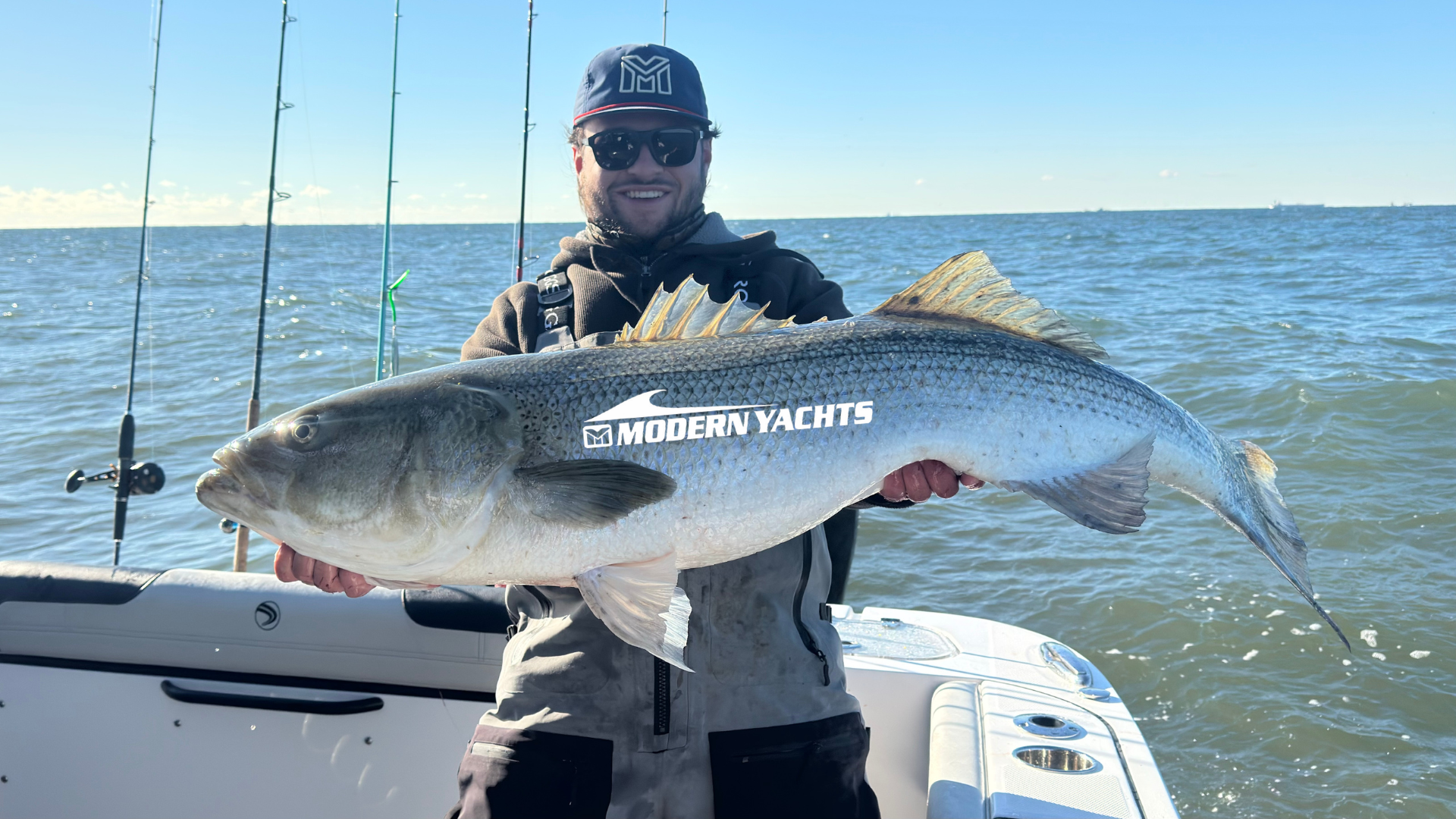
Estimated read time: 6 minutes
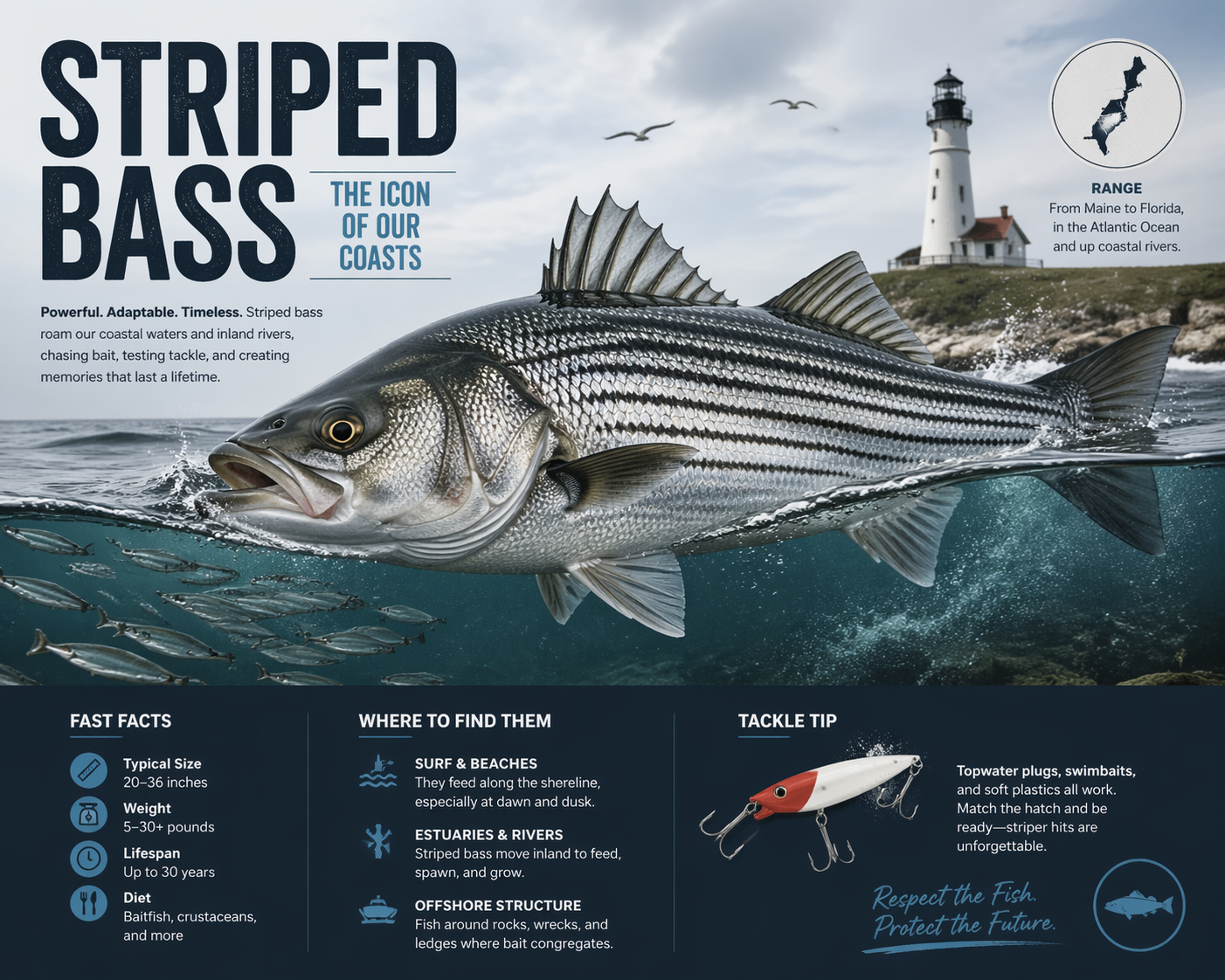
There’s a moment every spring on the East End when something shifts. The water temperature climbs past 50°F, the bunker start pushing into the bays, and word spreads fast — the stripers are back.
Striped bass season on Long Island is more than a fishing window. For anyone who grew up here or has spent enough time on the water, it’s a rhythm. A return. And if you know where to be and when to be there, it’s some of the best inshore and nearshore fishing on the entire East Coast.
Here’s what you need to know to make the most of it.
Why Long Island Is a Striped Bass Destination
New York’s official saltwater fish migrates along the Atlantic coast each year, north in the spring and south in the fall, and Long Island sits directly in that corridor. The East End in particular acts as a funnel, with Montauk Point often called the Surfcasting Capital of the World for good reason.
What makes this stretch of coastline so productive is the variety. You have ocean beaches with dramatic surf, Shinnecock and Moriches Inlets with powerful tidal flow, the Peconic Bay system running between the North and South Forks, and deep rips off Montauk that concentrate bait and predators alike. In the same day, you can fish calm protected water in the morning and be running offshore structure by afternoon.
Add in the abundance of baitfish including bunker, sand eels, herring, and snappers, and you have all the ingredients for consistent, high-quality fishing from spring through late fall.
The Season Breakdown
Early Spring: April 15th through May
The season officially opens April 15, and the first wave of migrating fish isn’t far behind. These are typically school-sized stripers, feisty and aggressive, and a welcome sight after a long winter. Back bays, harbors, and the inlets are your best bets early, with Hampton Bays and the Shinnecock Canal area being reliable producers as water temps climb.
This is the build-up phase. The fishing isn’t always explosive, but the anticipation is half the fun. Pay attention to water temperature and baitfish movement. When the bunker show up, the stripers aren’t far behind.
Late Spring to Early Summer: May through June
This is arguably the most consistent stretch of the season. Larger fish push east toward the Hamptons and Montauk, water temperatures are still comfortable, and the bass are actively feeding. Shinnecock Inlet, Peconic Bay, and the rips off Montauk all come alive during this window.
If you’re going to pick one time of year to get out on the water for stripers, late May and early June is hard to beat.
Peak Summer: July through September
The largest biomass of fish is in local waters during midsummer, but the fishing requires more strategy. Daytime heat pushes fish deeper and slows the bite, so early mornings, evenings, and nights become the most productive windows. Offshore structure, channel edges, and deeper rips hold fish when the surface temps spike.
Timing matters more now than any other time of year. The fish are there. You just have to meet them on their schedule.
The Fall Run: October through December 15th
This is what East End anglers live for. As water temperatures drop and stripers begin their southern migration, they feed aggressively to fuel the journey. The result is some of the most spectacular fishing of the year, with big bass blitzing along South Shore beaches, trophy fish in the rips off Montauk, and those golden-hour mornings that look like they belong on a magazine cover.
The season runs through December 15, giving you well into late fall to chase the bite. If you’re serious about stripers, clear your October calendar and keep it open through the close.
How to Fish for Striped Bass on Long Island
From the Boat
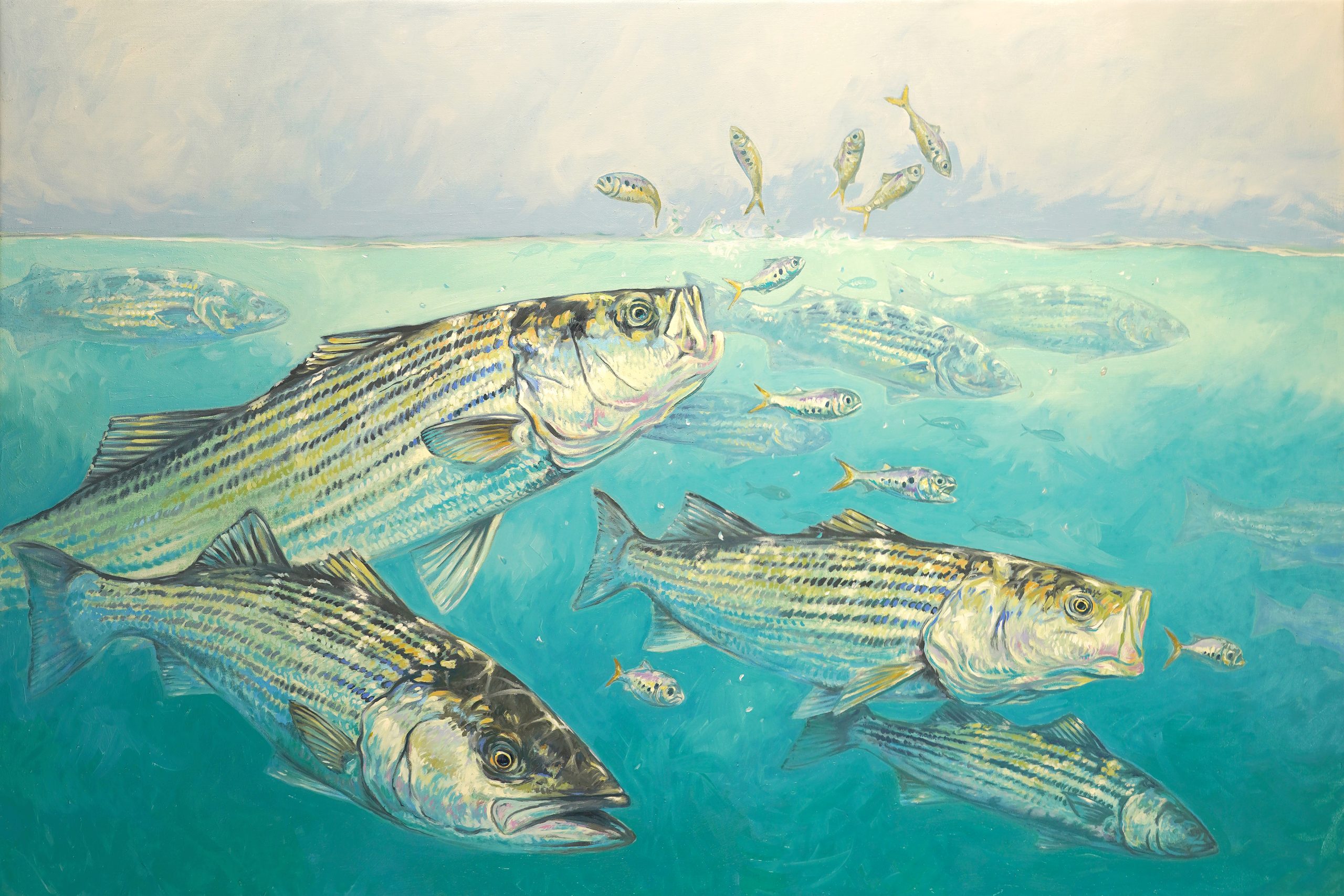
Having a boat opens up the full range of striper fishing on the East End, from running the Peconic Bay at sunrise to fishing the Montauk rips in the afternoon. Common approaches include trolling umbrella rigs or mojos, drifting live bunker or eels over structure, and jigging deep channels and ledges.
A capable center console like the EdgeWater 340CC gives you the range to cover serious water, from the back bays near Mattituck and Westhampton Beach all the way to the offshore structure around Montauk Point. That versatility is what separates a good striper day from a great one.
From Shore
Surfcasting for stripers on Long Island is a tradition in its own right. Plugs, poppers, and soft plastics all produce fish from the beach, with dawn and dusk on moving tides being the most reliable windows. Focus on structure like sandbars, cuts, jetties, and points, as these all concentrate fish.
The beaches from Westhampton east to Montauk are some of the most productive surfcasting grounds on the Atlantic coast. Knowing the tides and reading the water matters more than fancy gear.
Top Baits and Lures
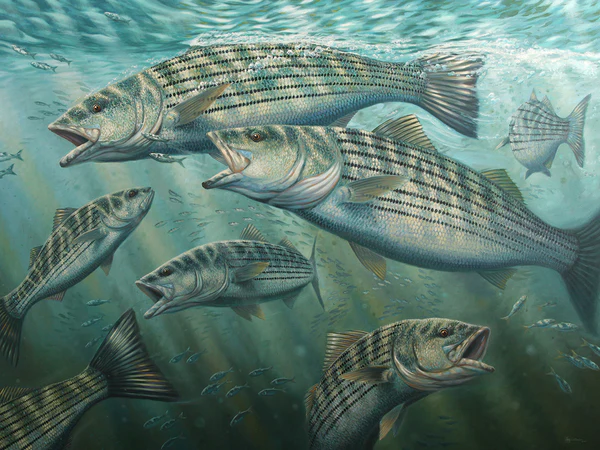
Stripers are opportunistic feeders and will eat just about anything, but some options consistently outperform. Live or chunk bunker is a staple, eels are especially effective at night and in the fall, and clams and sandworms are reliable producers for bay and inlet fishing. Soft plastics, swimbaits, and topwater plugs all have their place depending on conditions. Match the bait to the baitfish that are present and you’ll be in good shape.
Regulations: Always Check Before You Go
New York’s striped bass regulations have been updated in recent years as part of ongoing conservation efforts, and it’s your responsibility to fish within the current rules. For marine waters south of the George Washington Bridge, the current regulations are a slot size of 28 to 31 inches, a bag limit of one fish per angler, and a season running April 15 through December 15.
Always verify current regulations with the NYSDEC before heading out, as rules are subject to change season to season. You can find the latest information at dec.ny.gov. Striped bass are a managed resource, and following the regulations ensures the fishery stays healthy for future seasons.
Local Access: East End Launch Ramps and Marinas
The East End has solid water access across the region. Anglers near our Hampton Bays location can launch from the Ponquogue Bridge area and reach Shinnecock Bay quickly. Westhampton Beach provides access to Moriches Bay and the inlet. Further east, Mattituck Inlet is a convenient departure point for North Fork anglers heading into the Sound or pushing east toward the Peconic system.
For those running to Montauk, the town ramp and various marina facilities provide access to the Point and the surrounding offshore water, with fuel and amenities available for longer runs.
The Right Boat Makes All the Difference
Striper fishing on the East End rewards versatility. The ability to run from protected bay water out to exposed offshore structure, and do it comfortably and confidently, changes the quality of the experience entirely.
Whether you’re covering the Peconic in a center console, drifting live bait through Shinnecock Inlet, or running to the Montauk rips on a calm morning, having a boat built for East End conditions means you’re not limiting yourself to what’s accessible from shore.
Our team at Modern Yachts has been on this water for over 55 years. We know what these conditions demand, and we carry boats built to handle them. If you’re thinking about getting into a boat before striper season hits full stride, we’d love to help you find the right fit. Browse our current inventory or stop into one of our locations in Hampton Bays, Westhampton Beach, or Mattituck and let’s get you on the water.
FAQ’S
When does striped bass season start on Long Island?
The official season for marine waters runs April 15 through December 15. The East End bite generally builds through late April and May as water temperatures rise and migrating fish push east toward Montauk.
Do I need a fishing license to catch striped bass in New York?
Yes. A New York State Recreational Fishing License is required for saltwater fishing. Licenses can be obtained through the NYSDEC website.
What is the size limit for striped bass in New York?
For marine waters south of the George Washington Bridge, the current slot size is 28 to 31 inches with a one fish per angler bag limit. Always confirm the latest rules at dec.ny.gov before heading out, as regulations are subject to change.
What is the best time of year to catch big striped bass on Long Island?
The fall run from October through November is when the largest fish tend to show up in numbers. The migration south triggers aggressive feeding behavior and produces some of the most memorable fishing of the year.
Can I fish for stripers from shore on Long Island?
Absolutely. Surfcasting is a beloved tradition on the East End, particularly along South Shore beaches and around Montauk Point. Dawn, dusk, and moving tides are your best windows.