
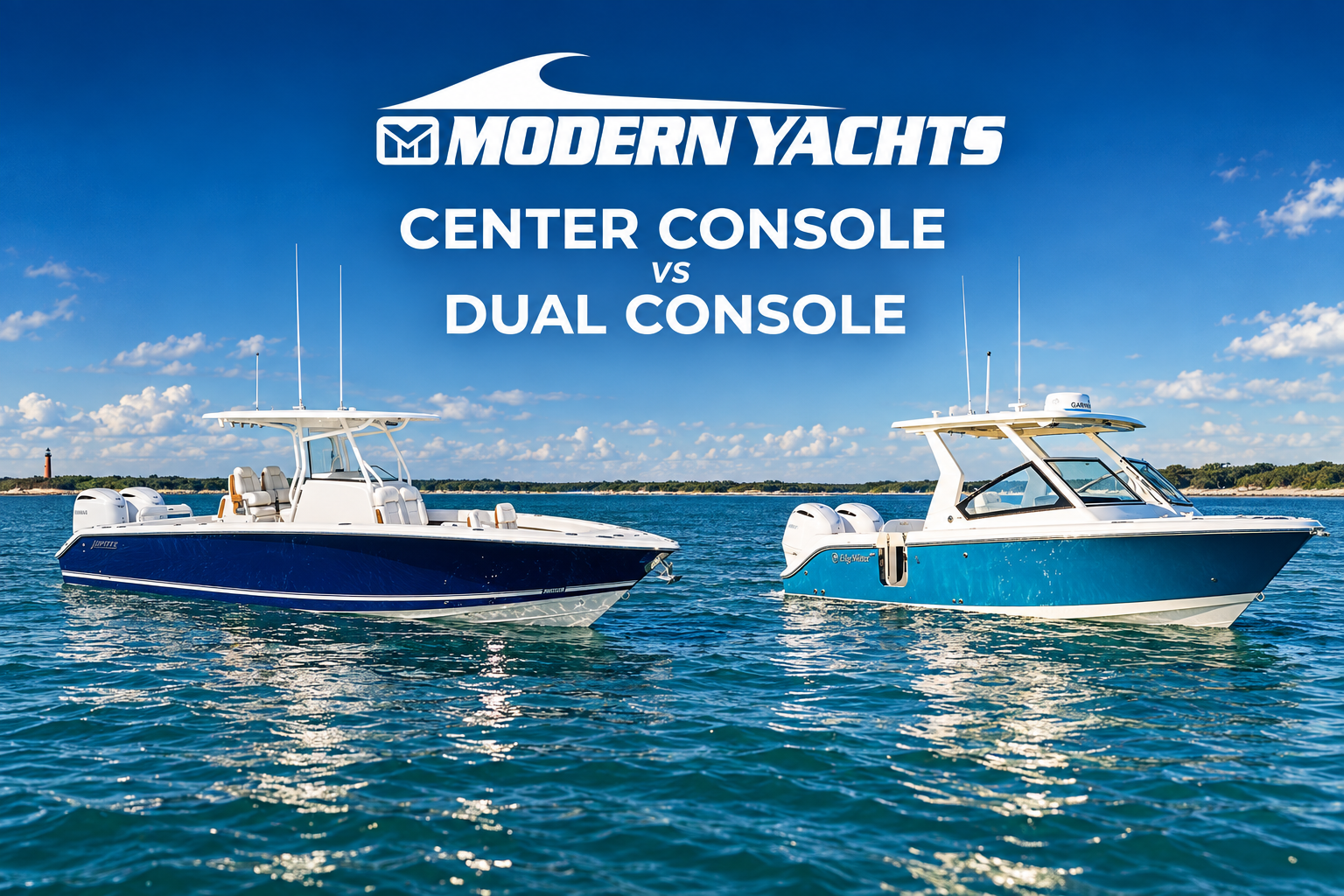
The center console vs dual console decision comes down to how you want to spend your time on the water. Both layouts can support fishing, cruising, and family outings, but they organize space differently. That affects everything from moving around with a fishing rod to finding a comfortable seat behind the windshield.
For Long Island boaters, the right choice should reflect your usual crew, favorite activities, and the waters you plan to explore. A morning fishing trip out of Montauk creates different priorities from an afternoon cruising the Peconics with family.
Here’s how the layouts compare, with examples from Jupiter and EdgeWater, plus two alternative designs from Nimbus and EdgeWater worth considering.
Center Console vs Dual Console: The Main Differences
A center console places the helm near the middle of the boat, with passageways on both sides. A dual console typically places the helm to starboard and a passenger console to port, with a central walkway through the windshield to the bow.
| Feature | Center console | Dual console |
|---|---|---|
| Movement around the boat | Walkways on both sides of the console connect bow and stern. | A central walkthrough connects the cockpit and bow. |
| Fishing access | Open circulation around the console can help anglers follow a fish and manage lines. | Fishing space depends on seating arrangements and cockpit design. |
| Wind protection | Varies with windshield, hardtop, and enclosure options. | A windshield typically spans the helm and companion seating areas. |
| Passenger seating | Often combines bow seating, helm seating, and an aft bench. | Often includes companion lounges and flexible cockpit seating. |
| Head compartment | May be located inside the center console. | May be located within one of the consoles. |
| Main tradeoff | Open access can mean greater exposure for passengers. | Additional seating can occupy space otherwise used for fishing or moving around. |
These are common layout differences. Equipment, comfort, and storage vary by model, so compare the actual boats rather than assuming every boat in a category is alike.
Center Console Boats: Open Access and Flexible Use
The strongest argument for a center console is how easily people can move around it. Anglers can work along either side, reach the bow, and return to the cockpit without passing through a windshield opening.
That access also helps when handling dock lines, loading supplies, or moving between seating areas. Many models add bow lounges, folding transom seats, private heads, and shade options, making them useful well beyond fishing.
For a center console vs dual console comparison, pay particular attention to passenger comfort underway. Check which seats have wind protection, how much shade reaches the seating areas, and where passengers can hold on comfortably.
Featured Center Console: Jupiter 32
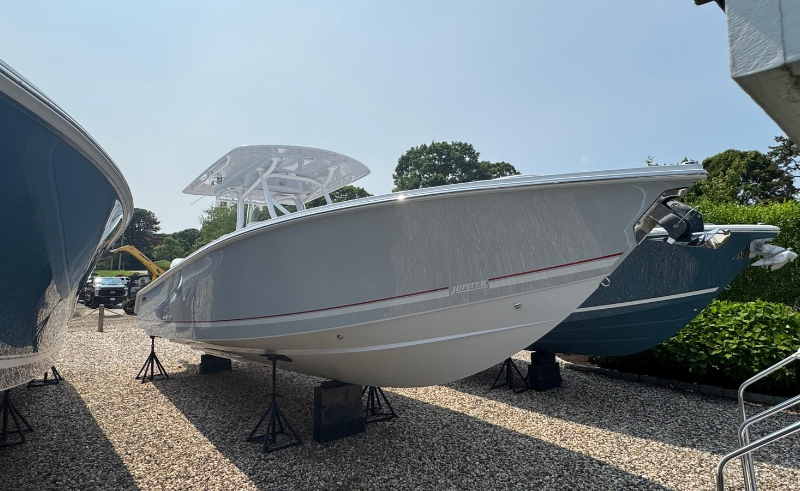
The Jupiter 32 illustrates how a traditional center console can combine fishing access with cruising amenities. Its 32′8″ overall length and 9′9″ beam provide room to compare both aspects of the layout.
The featured 2026 boat has twin Yamaha 350 outboards, Helm Master EX joystick control, a windshield with a vent and wiper, and an electric head with a sink inside the console. Fishing equipment includes an aft livewell, in-deck fishboxes, tackle storage, and under-gunwale rod racks.
Forward seating and a fold-down aft bench provide places to relax when the fishing gear is put away. It is a useful example for buyers who want fishing to remain central to the boat’s design while accommodating family and friends.
Explore the featured Jupiter 32 or read our Jupiter 32 review.
Dual Console Boats: Passenger Comfort with Fishing Versatility
Dual consoles typically place more emphasis on seating around a windshield-protected cockpit. The helm and companion areas sit on opposite sides, with a walkway between them leading forward.
This arrangement can appeal to families who spend much of their time cruising, entertaining, or taking part in watersports. Some models also retain livewells, rod storage, fishboxes, and convertible seating for fishing days.
A dual console is worth considering if your usual passengers place a high priority on lounge seating and protection from wind and spray. During your visit, open the walkthrough, deploy the seats, and assess how the layout works with everyone aboard.
Featured Dual Console: EdgeWater 262CX
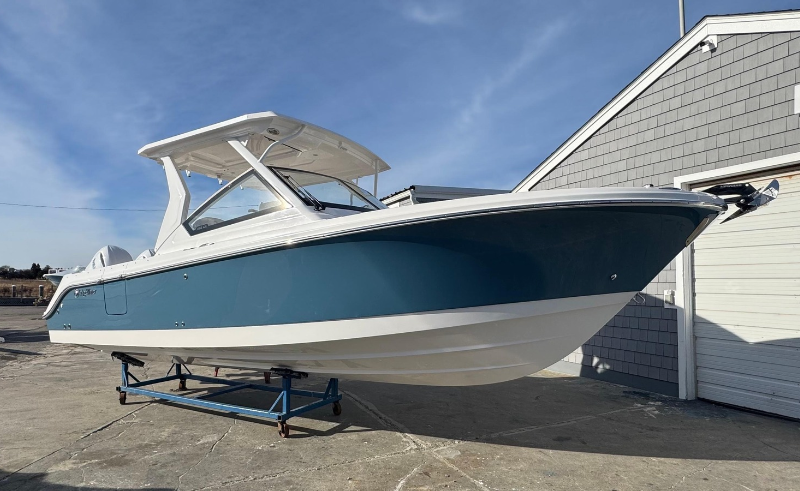
The EdgeWater 262CX provides a clear example of the crossover approach. EdgeWater lists it at 26′5″ in length with a 9′3″ beam and a 155-gallon fuel tank.
Its dual console layout includes a walkthrough windshield, bow seating, a portside lounge, and an enclosed head compartment. Fishing features include rod racks, insulated bow fishboxes, and a transom baitwell.
The 262CX shows why choosing a dual console does not mean giving up fishing. Its appeal lies in accommodating different activities within the same boat, with seating and cockpit features that support both family outings and time with a rod in hand.
Explore our EdgeWater boats for sale on Long Island or ask our team about 262CX availability and equipment.
Other Layouts Worth Considering
Some boats offer alternatives to the traditional center console vs dual console choice. If you like parts of both layouts, these two models deserve a closer look.
Nimbus T9 X Edition: A Walkaround Dayboat
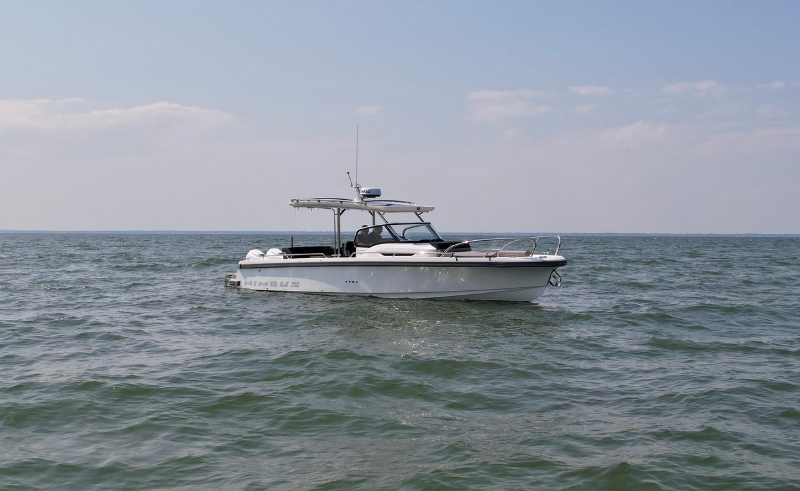
Nimbus describes the T9 as a walkaround dayboat. Its open deck circulation makes it relevant to this comparison, while its cabin and social spaces give it a distinct cruising focus.
The featured 2025 T9 X Edition has twin Mercury 225 V6 outboards, a T-top with an enclosure, a bow thruster, and Simrad navigation equipment. A forward cabin, separate head, refrigerator, and flexible seating support longer days aboard.
For buyers drawn to open movement around the deck but focused primarily on cruising and entertaining, the T9 offers another layout to experience in person.
Explore the Nimbus T9 X Edition.
EdgeWater 310SC: A Side Console Alternative
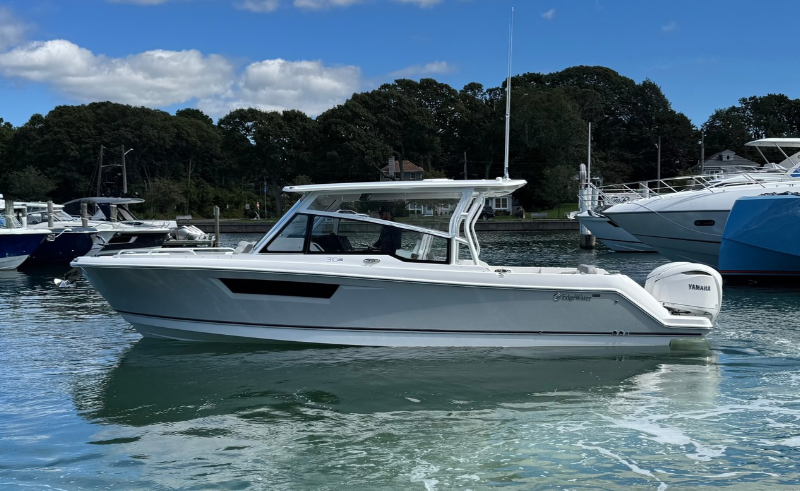
The EdgeWater 310SC uses a side console layout. Although EdgeWater includes it within its broader Crossover range, it should be distinguished from a traditional dual console.
At 32′ overall with a 9′6″ beam, the 310SC combines bow lounge seating, a portside aft-facing lounge, convertible transom seating, and an integrated prep station. A double berth and enclosed electric head below add accommodation for longer outings and overnight plans.
It is worth comparing with the 262CX if passenger space and cabin amenities are important to you. Walking through both boats will help you understand how differently they use their available space.
Explore the featured EdgeWater 310SC.
Center Console vs Dual Console: Choosing for Your Crew
Start with the outings you take most often. Then use these questions to compare the boats on your shortlist:
- How much of the day involves fishing? Check access around the boat, usable cockpit space, and where gear will be stored.
- Who usually comes aboard? Have your regular passengers try the seats, head compartment, and boarding arrangements.
- How important is weather protection? Compare windshields, hardtops, and available enclosures rather than relying on the layout name.
- How easily does the boat change activities? Deploy tables and seats, then see what needs to move before fishing.
- Will it fit your home port and ownership plans? Confirm dimensions, storage arrangements, engine service needs, and your operating budget.
For Long Island boating, consider your home dock and intended routes alongside the layout. The center console vs dual console label does not determine how a particular boat will handle offshore conditions. Hull design, loading, equipment, weather, and operator experience all matter.
A sea trial can help you assess visibility, seating comfort, handling, and wind protection in the conditions available that day.
Compare Boat Layouts at Modern Yachts
The center console vs dual console decision becomes easier when you step aboard and picture your own crew using the space. Compare the Jupiter 32 and EdgeWater 262CX, then explore how the Nimbus T9 X Edition and EdgeWater 310SC approach cruising and passenger comfort differently.
Modern Yachts serves boaters through Hampton Bays, Westhampton Beach, and Mattituck. Browse our boats for sale or contact our team to arrange a visit. Confirm each boat’s location and availability before traveling.
FAQ’S
Which Is Better for Fishing: Center Console vs Dual Console?
Center consoles often offer easier movement around the boat, which can be valuable when multiple people are fishing. A dual console can also be well equipped for fishing. Compare cockpit space, rod storage, livewells, fishboxes, and seating flexibility on the models you are considering.
Are Dual Console Boats Better for Families?
They can suit families who prioritize companion seating and windshield protection. Center consoles can also provide comfortable seating, shade, and private heads. The better choice depends on your passengers and how they use the boat.
Can Dual Console Boats Go Offshore?
Some dual consoles are designed for offshore use. Evaluate the specific hull, equipment, loading, and conditions rather than treating console layout as a measure of seaworthiness. A larger boat or a particular layout does not make every trip appropriate.
Is the EdgeWater 310SC a Dual Console?
EdgeWater describes the 310SC as a side console. It offers a different arrangement from a traditional dual console, with social seating, a prep station, and cabin accommodation.
Is the Nimbus T9 a Traditional Fishing Center Console?
Nimbus describes the T9 as a walkaround dayboat. It provides open deck access and can support fishing activities, but its cabin, seating, and cruising amenities distinguish it from a conventional fishing-focused center console.